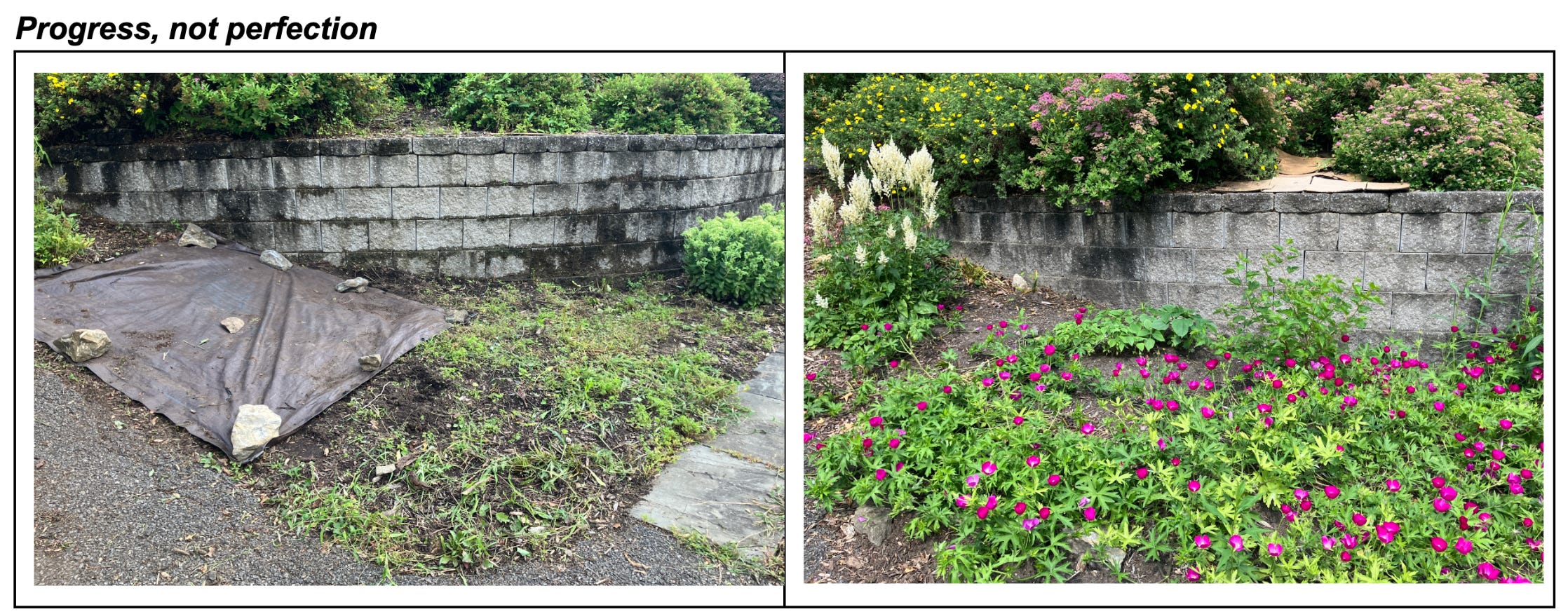
Answers to Questions I May or May Not Have Been Asked
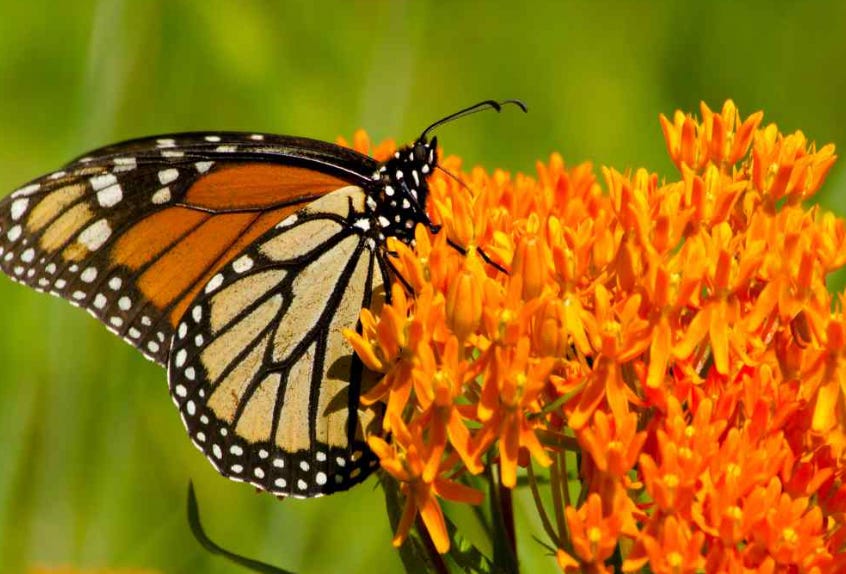
On a pollinator garden discussion board, someone asked if she can deadhead the orange flowers of Asclepius Tuberosa (butterfly weed) to encourage more blooms. I considered asking, either with or without a FFS thrown in, if we could just, for once, let nature do her thing. I held back the snark, and someone else commented they’d considered the same thing but didn’t want to disrupt the lives of any Monarch caterpillars growing on the plant. A kinder more informed answer.
I’m new to gardening. It’s my context for learning in old age. (Friends say “you are not old!” Reality check: 63 is old, even if I may luck out and live 40 more years.) I’m becoming a tryer, out on the edge of not quite knowing what I am doing in the context of the very material world, dirt and worms and snakes and thorns and dragging hoses up hills and lifting rocks and 40-pound bags of composted manure. And I love it.
Until two years ago when we got this house with an established classic garden in front (peonies and roses and various shrubs from Japan) and a newer wildflower meadow garden in back (Black-eyed Susans and coneflowers and bee balm), I’d never used the word deadhead for anything but the people who followed the Grateful Dead. Upon gaining this garden, I added it to my list of things I needed to learn to do–when and on what plants and why. As with pruning, I was afraid to act without knowledge. What if I made a mistake? I had been a good student for a lifetime, learning the rules from books and teachers, then following them until I was knowledgeable enough to improvise and become a teacher myself. With gardening, somewhere along the way in my book and blog and youtube-video learning, I encountered the idea that maybe, and especially if I was trying to restore my land to something that supported the maximum amount of life, just maybe I didn’t have to to do all this maintenance designed to artificially extend peak ripeness, to force the plants into maximum performance.
I suffer bouts of shame. What do my neighbors and passers-by think of my undead-headed blossoms? Shouldn’t I be trying to have a more attractive exterior?
These periodic crises force me to review my purpose. Why am I tending to this land? And how can I be more responsive and receptive to what this partner, the land, is telling me? Native life-supporting plants seem willing to return, given a bit of space and minor tending, mostly just cutting back the invasive bullies that are trying to take all the sun and moisture. I’m not naturally inclined to patient watchful responsiveness. Receptivity came hard to me. Raised by tough parents born in the depression in Eastern Montana, I did not expect the world to provide. At least not for me. I’d have to earn, through self-sufficient hard graft and nose to the grindstone, anything. But the garden, a gift in itself, is reinforcing the experience that breastfeeding my babies began to teach me: if I am attentive and if I respond rather than enforce, I can come into rhythm with a system that is more than sufficient.
I have bouts of doubt. Shouldn’t I be doing more to extend life and performance, both mine and my garden’s? I compare myself to others. Shouldn’t I be trying to have a more attractive exterior? To find my footing when I fall into this self-absorbed frenzy, I return to my goal, which is, as I tell my husband, is to see a fox in our yard. And an owl. Last week, at a community event a few blocks from our house, we were sitting on a bench looking at the river, when we saw movement at the edge of the woods. A fox ran across the grass and back into the woods. Not yet in our yard, my husband said, but close.
Can I allow the beauty of the world to be enough? In this season of ripe peaches, can I be content with my daily intake, juice running down my chin, without scheming to take steps to–artificially and with violence, because that is what enforced peak fertility requires, as the cows attached to milking machines illustrate–always have this gorgeousness available to me everyday of the year?